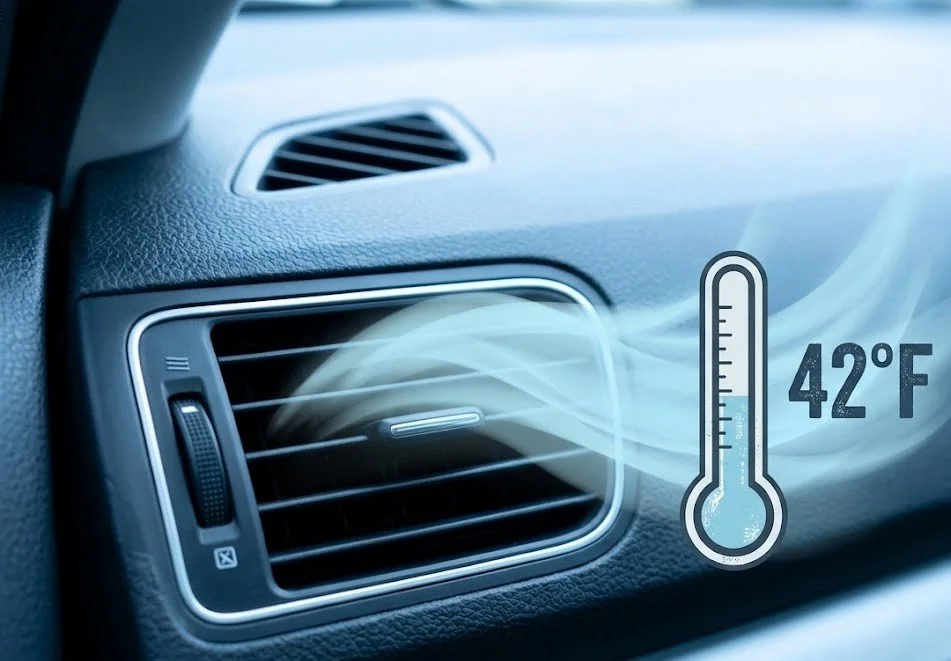

Is Your Car’s AC Actually Broken? Save a Trip to the Shop (And 4 Things You Should NEVER Do)
The summer heat is officially here, and the last thing you want is a lukewarm breeze blowing out of your vents. Your immediate reaction might be to panic, hop online, and schedule an emergency appointment with us.
But hold on a second.
Before you drive down to the shop and pay for a diagnostic, we want to let you in on a little insider secret: sometimes, a "broken" AC system is actually just a simple, five-minute fix you can do in your own driveway.
As much as we love seeing our customers, we love saving you money even more. Before you call us, run through this quick troubleshooting guide—including the massive pitfalls you need to avoid.
🛠️ The Quick Driveway Checks (Do These First)
1. Check Your Cabin Air Filter
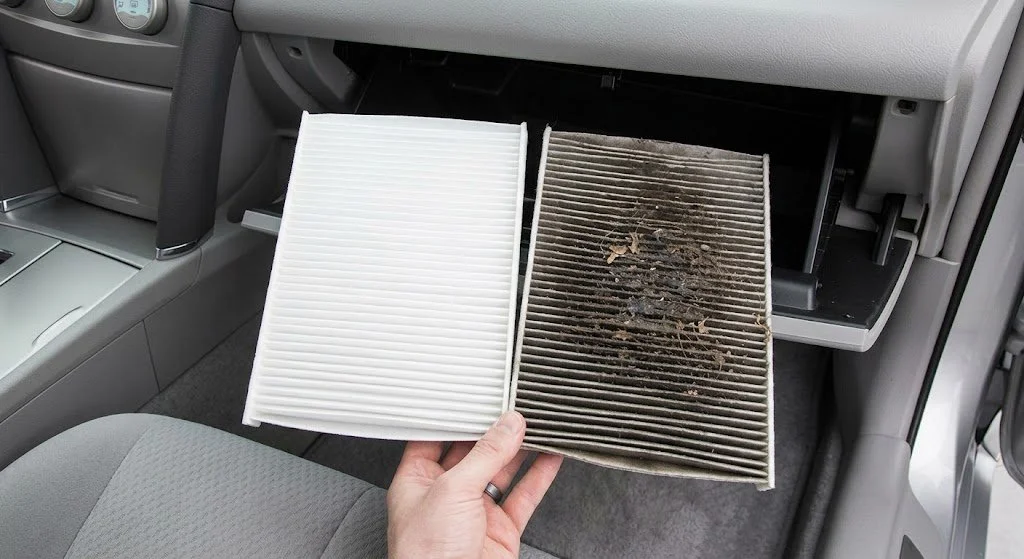
If your AC is blowing freezing cold air, but it feels like a tired puppy gently breathing on you even when the fan is on "Max," your system isn't broken. It’s just suffocating.
The Problem: Most modern cars have a cabin air filter hidden behind the glovebox. Over time, it gets caked with dust, dirt, and leaves. If air can't get through the filter, it can't blow out of your vents.
The Fix: Pull it out. If it looks like a dusty lint trap from a dryer, grab a replacement at a local parts store for $15 to $20.
2. The "Recirculate" Button Trap
Look at your climate control dashboard. Is the Recirculate button (the icon showing a U-turn arrow inside a car outline) turned on?
The Problem: If you are pulling fresh air from outside on a 90-plus degree day, your AC has to work overtime to cool that scorching outside air down.
The Fix: Push that recirculate button. This forces the system to pull the air that's already inside the car, running it back through the cooling coils. It makes the cabin cool down twice as fast.
3. Hose Down Your Condenser
Your car's AC doesn't actually "create" cold; it pulls heat out of your cabin and dumps it out the front of your car through a mini-radiator called the condenser (located right behind your front grille).
The Problem: Because it's at the very front of your car, it gets plastered with bugs, dirt, and highway grime. If it's clogged, the heat cannot escape, and the system will blow warm air inside.
The Fix: Grab your garden hose (do not use a high-powered pressure washer, as it will bend the delicate aluminum fins) and gently spray out the front grille of your car to clear the debris.
🛑 The "What NOT to Do" List: The #1 Rule
If the quick fixes above don't work, you might be tempted to start tinkering. Don't. Here is the ultimate list of what not to do if you want to protect your wallet:
🚨 DO NOT ADD FREON!!!
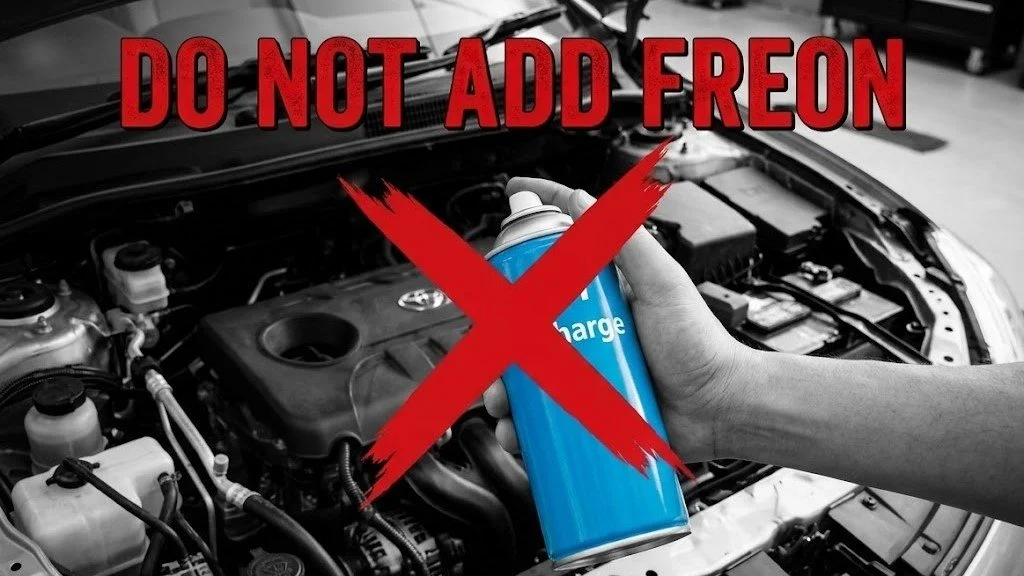
We cannot stress this enough: Step away from the DIY "recharge" cans at the auto parts store.
You can easily destroy your compressor: Modern automotive AC systems are incredibly precise. They are measured down to the ounce. If you guess and add too much refrigerant, you create dangerous high pressures that can instantly blow out seals or completely seize a $600+ compressor.
The "Leak Sealer" nightmare: Most of those DIY cans contain chemical leak sealers. When those chemicals hit the air inside a leak, they harden into a plastic-like glue. The problem? They also harden inside the tiny, microscopic passages of your car's internal AC valves, effectively bricking your entire system from the inside out. A simple leak repair turns into a multi-thousand-dollar total system replacement.
If it's low, it has a leak: Refrigerant doesn't get "used up" like engine oil. It’s a closed loop. If it's low, you have a physical hole somewhere. Adding more Freon without fixing the hole is just throwing money onto the highway.
🚨 Do Not Poke the Valves
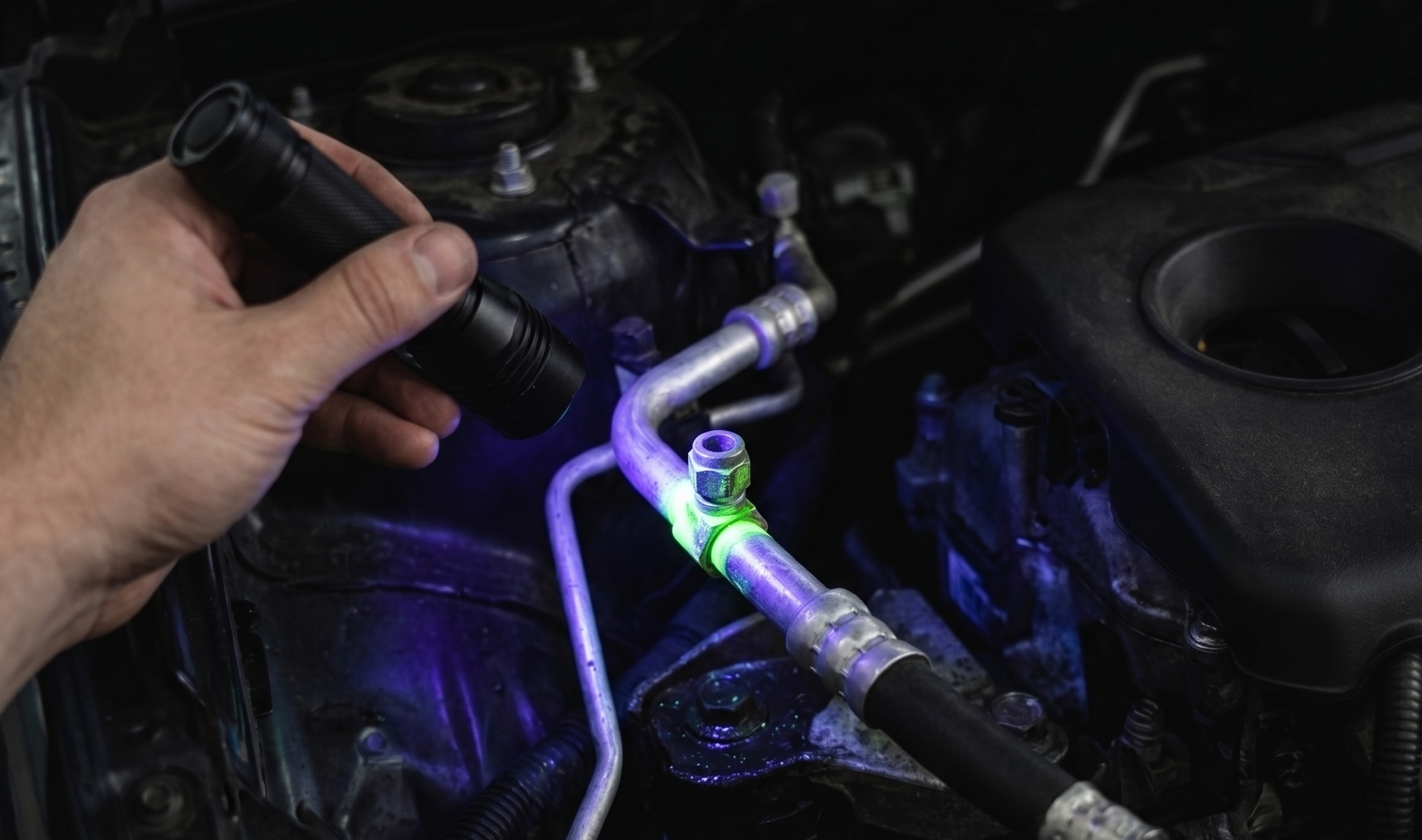
Never take a screwdriver or a pen and push down on the AC service ports to "see if there is gas in there." Not only is venting refrigerant illegal and dangerous to your skin and eyes, but letting air and moisture into the system creates a corrosive acid that eats the components from the inside out.
🚨 Do Not Ignore Strange Noises
If you turn your AC on and hear a loud screeching, grinding, or a deep clicking noise from under the hood, turn it off immediately. That is your AC compressor crying for help. Running it while it's failing can cause it to "black death" your system—shredding metal shavings through every single line, which requires replacing the entire system.
When is it Time to Call the Pros?
If you've checked your cabin filter, cleared your condenser, verified your buttons, and you're still sweating, it’s time to bring it in.
At this point, you are likely dealing with a mechanical component failure or a leak that requires a professional pressure-test and UV dye. We’re always here to help with the heavy lifting, but we hope these quick driveway tips save you a trip (and some serious cash) this summer!